Many patients tell me almost in passing: "Oh, my gums bleed a bit when I brush, but that happens to everyone." No, it is not normal — even though it is very common. The good news: caught early, the problem clears up completely. The less good news: ignored for years, it is the most common reason adults lose otherwise healthy teeth.
Healthy gums do not bleed
Healthy gums are pale pink, firm and do not bleed with normal brushing. If you see blood on your toothbrush or in the sink, your gums are telling you they are inflamed. In most cases, the cause is one of the following.
Cause 1: plaque and tartar (gingivitis)
This is cause number one. Bacterial plaque left at the gumline irritates the gum; within days it hardens into tartar, which a toothbrush can no longer remove. The gum responds with inflammation: redness, swelling, bleeding. Gingivitis is reversible — after a professional cleaning and proper brushing, the gums usually heal within 1–2 weeks.
Cause 2: brushing the wrong way
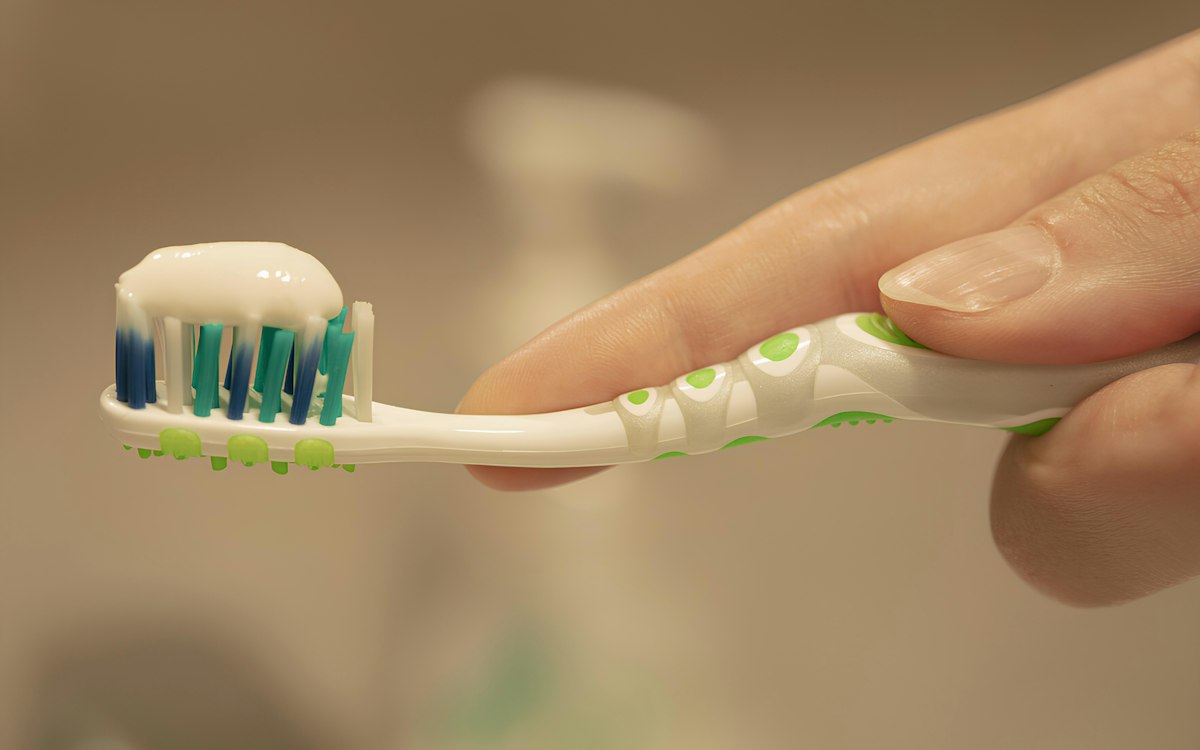
- A brush that is too hard, or scrubbing too firmly — this injures the gum and, over time, makes it recede.
- Brushing only side to side, which skips exactly the gumline where plaque builds up.
- Brushing too briefly — under two minutes, the back teeth almost always get missed.
The fix: a soft brush, small strokes from gum to tooth, twice a day for two minutes. An electric brush with a pressure sensor helps a lot if you tend to press too hard.
Cause 3: you just started flossing
If you have just started using floss or interdental brushes, some bleeding in the first days is normal — the spaces between your teeth were inflamed long before, you just could not see it. Keep going daily: if the bleeding has not decreased after 1–2 weeks, it is time for a check-up.
Cause 4: hormones
Pregnancy, puberty and sometimes contraceptives make gums more sensitive to the same amount of plaque. In pregnancy, gingivitis is so common it has its own name — pregnancy gingivitis. That is not a reason to postpone the dentist; on the contrary, a cleaning during pregnancy is safe and helps a lot.
Cause 5: medication and general health
- Anticoagulants and aspirin make any inflammation bleed more easily. Do not stop them on your own — just tell your dentist what you take.
- Diabetes, especially when poorly controlled, raises the risk of gum disease — and inflamed gums in turn make blood sugar harder to control.
- Smoking is a special case: it reduces blood flow to the gums, so bleeding may be absent even as the disease progresses. Smokers are falsely reassured.
- Less often, bleeding gums can signal a clotting or blood disorder — especially together with easy bruising or nosebleeds.
Warning signs
See a dentist soon if you have any of these:
- Bleeding has lasted more than two weeks despite brushing properly.
- Gums bleed on their own, not just when brushing.
- Bad breath that does not go away after brushing.
- Receding gums — teeth look "longer".
- Loose teeth, or new gaps between them.
- Pus at the gumline or a persistent bad taste.
"Periodontitis does not hurt until late. Its first sign is often just a little blood on the toothbrush — exactly the sign we all tend to ignore."
These signs can point to periodontitis — inflammation that goes beyond the gum and attacks the bone around the tooth. Unlike gingivitis, lost bone does not grow back on its own, but the disease can be stopped if treated in time.
What to do starting today
- Do not stop brushing because of bleeding — that makes the inflammation worse. Brush more gently, not less often.
- Add floss or interdental brushes every day.
- Book a professional cleaning (ultrasonic scaling, Air-Flow, polishing) — at Avicenna it costs 800–1,000 MDL.
- At the exam we also check the gum pockets and, if needed, take an X-ray to assess the bone.
Conclusion
Bleeding gums are an early, easily treatable signal, not a minor detail. If the bleeding does not stop within two weeks or you notice any of the warning signs, book a free consultation at Avicenna: we find the cause, clean what needs cleaning and show you how to keep your gums healthy at home.
Author