
In autumn and winter I often get the same message: "I have had a cold for a few days and now all my upper back teeth hurt. Should I see a dentist or an ENT?" It is a very good question, because the answer is not always obvious. Below I explain why a sinus can mimic toothache, how to tell the two apart, and when you should see a doctor without waiting.
Why a sinus can "hurt in your teeth"
The maxillary sinuses are two air-filled spaces in the cheekbones, sitting right above the upper back teeth. In many people, the roots of the upper premolars and molars reach very close to the sinus floor — sometimes separated only by a thin plate of bone. On top of that, the upper teeth and the sinus lining share the same nerve branches. When the sinus is inflamed and full of mucus, the pressure is passed on to the roots and the brain reads it as toothache.
Signs it is more likely the sinus
- Several upper teeth hurt at once, on one or both sides, and you cannot point to a single one.
- The pain is a dull pressure rather than sharp and throbbing.
- It gets worse when you bend forward, walk down stairs or move your head suddenly.
- You also feel pressure under the eyes or in the cheek, your nose is blocked, there is discharge, and sometimes your sense of smell is reduced.
- It started with the cold or a few days into it.
- Your lower teeth do not hurt at all.
Signs it is more likely the tooth
- One single tooth hurts, always the same one, and you can point to it.
- The tooth reacts to cold, heat or sweets, and the pain lingers after the trigger is gone.
- It hurts to bite on it or touch it, as if the tooth were "taller" than the others.
- The pain throbs, comes on by itself and wakes you at night.
- You can see a cavity, a broken filling, or there is swelling on the gum.
- The pain is still there after the cold has completely cleared.
The other way round: when a tooth causes sinusitis
The connection works both ways. An infection at the root tip of an upper molar or premolar can spread into the sinus and cause sinusitis of dental origin (odontogenic sinusitis). It has a few telltale features: it is usually one-sided, often comes with a bad smell or taste, and keeps coming back or never fully clears with the usual sinus treatment. Sometimes the culprit tooth does not even hurt, because its nerve died long ago.
In these cases, treating "the nose" alone is not enough — the tooth needs treatment too. That is why it helps when the ENT doctor and the dentist work together: if you keep getting sinusitis on one side, tell your ENT about any treated or painful teeth and ask for a dental check as well.
A special case is the period after an upper back tooth has been taken out. If, after an extraction, you notice liquid passing from your mouth into your nose when you drink, or air coming through when you blow your nose, let your surgeon know straight away. Until then, do not blow your nose hard and do not sneeze with your mouth closed.

What you can do at home
- Rest, plenty of fluids and humidified air in the room.
- Saline nasal rinses from the pharmacy — they help clear mucus and ease the pressure.
- An ordinary painkiller, strictly at the dose on the leaflet. Decongestant nasal sprays only for as many days as the leaflet says.
- Sleep with your head slightly raised.
- Do not start antibiotics on your own — most sinus infections that come with a cold are viral, and antibiotics are a doctor’s decision.
- Keep brushing normally, even if your teeth feel tender. A cold is no reason to skip oral hygiene.
When to see a doctor urgently
Call 112 or go to the nearest emergency department if, along with the pain, you notice any of the following:
- Swelling or redness around the eye, double or blurred vision.
- A very severe headache, a stiff neck or confusion.
- A high fever that will not come down, or feeling very unwell overall.
- Swelling of the cheek that is spreading fast, or difficulty swallowing or breathing.
See your GP or an ENT if sinus symptoms last longer than 10 days, get worse after first improving, or keep coming back. See a dentist if you have the "tooth" signs listed above, or if the pain does not go away once the cold is over.
What we check at the appointment
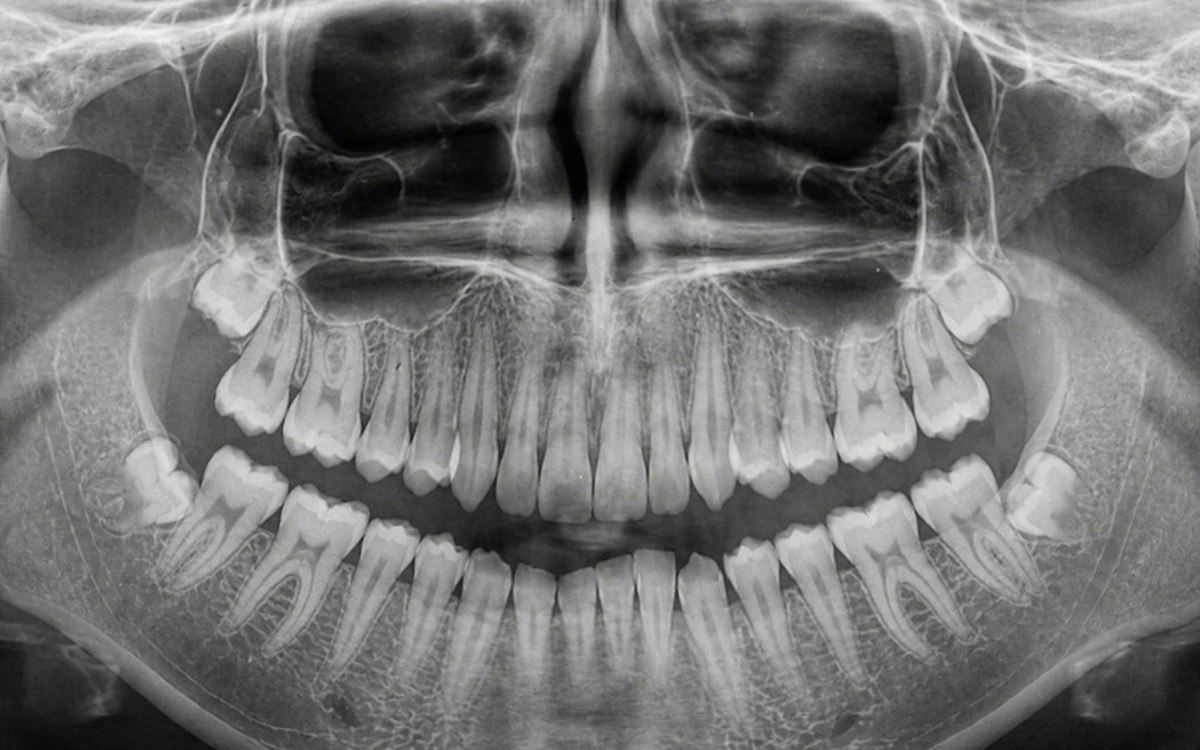
At the appointment we examine the upper teeth one by one: we test their response to cold, tap each tooth gently and check the gums. We take an X-ray, which shows whether there is a deep cavity, an infection at a root tip, or thickening of the sinus lining next to a particular tooth. If your teeth are fine, we will tell you so clearly and refer you to an ENT — we do not treat a healthy tooth "just in case".
"The most common scenario is an ordinary one: the sinus aches and settles down along with the cold. But if one tooth is still hurting afterwards, it can no longer blame the sinus."
The bottom line
Pain in several upper teeth during a cold usually comes from the sinus and goes away with it. A single tooth that hurts, reacts to cold or biting, or does not settle after the cold needs a dentist. And one-sided sinusitis that keeps returning is worth a dental check too. If you are not sure, message us on WhatsApp or Viber at +373 693 11 163 — the consultation at Avicenna near Chișinău is free.
Author